NPS.gov web taxonomy audit · November 2026
One Park Service.
63 ways to name a page.
Every National Park website starts from the same template. One click below it, each park draws its own map. The audit maps where labels diverge and proposes which decisions parks could share.
Use ← → or the buttons below to click throughSwipe or tap → to continue
The short version
The skeleton is shared. The vocabulary isn't.
NPS.gov already has one national structure at the top. What it lacks is one set of words underneath it.
- Lock the top two menu levels nationally.
- Control level three with a list of 130 terms.
- Leave proper names, like Delicate Arch, to the parks.
Of 3,176 flagged entries, 536 call for relabeling. Another 1,748 need vocabulary review.
01 · Scope and method
What was measured, and how.
on 63 sites. Sequoia and Kings Canyon share one.
from the same CMS feed NPS.gov uses to draw its menus and breadcrumbs.
from NPS.gov's sitemaps, inside the 63 park folders.
in the national template. Every site's level 2 was scored against them.
Crawled 16–17 November 2026. Each menu page was also fetched for its title, heading and meta description.
02 · The template
The top two levels are already close to national.
All 63 sites use the same three sections in the same order. No site has all 26 pages; five have 25.
03 · Conformance
The gaps cluster in pages, not parks.
Every site against every standard page. Missing pages pile up in a few rows, like Nearby Attractions, Wilderness and Support Your Park. Size doesn't predict it: Yosemite has the largest menu and still has 24 of 26.
04 · Terminology
One menu branch, three labels: “Biking” at Yosemite, “Bicycling Information” at Grand Canyon and “Bicycling” at Zion.
04 · Terminology
One concept, many names.
05 · Placement
The same page lives under different parents.
Would visitors choose the same starting point at another park? The audit records the available routes. A tree test would measure first choices.
“Find campgrounds.” Where parks put it:
Proposed home for all 63: Plan Your Visit › Eating & Sleeping › Camping
06 · Findability
Three of every four park pages have no place in a menu.
Most are news and blog posts, which is expected. The problem is the 1,766 trip-planning pages, including 189 campground pages and 10 live pages titled “Expired Content.”
07 · Integrity
The menu says one thing. The page says another.
| Menu label | Page heading |
|---|---|
| Park App | Acadia Goes Mobile |
| Arts in Acadia | Artists-in-Residence |
| Virtual Tour | Self Guided Tours |
Staff notes, published where visitors see them
Test Page
Education · GlacierCopy of Butterflies
Death ValleyFrequently Asked Questions Draft
Bryce CanyonFuture of Geology Test Page
YellowstoneName the navigation item
A live menu label at Carlsbad Caverns
71% of meta descriptions just repeat the page title.
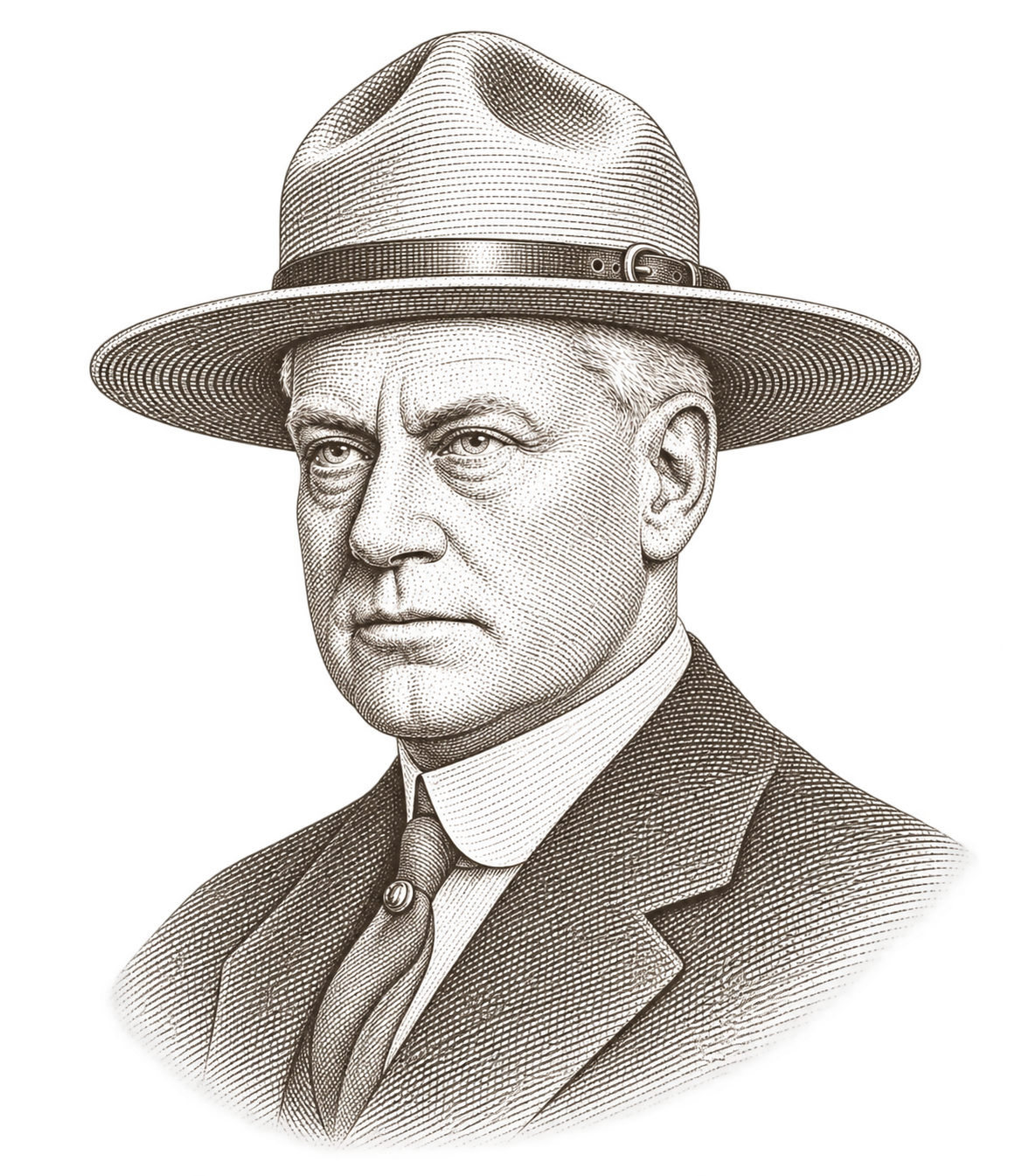
1920 · The first director of the National Park Service, on the ideal outcome
08 · Recommendation
Lock the top, control the middle, leave proper names to the parks.
Plan Your Visit · Learn About the Park · Get Involved. Already on 63 of 63.
Fixed names and order. 21 required, 9 optional.
Chosen from a list. Activities use NPS Activities terms.
Proper names only: Delicate Arch, Brooks Camp, the Old Courthouse.
08 · Recommendation
Eight rules keep it that way.
- One concept, one label, one parent.A page appears in the menu once.
- Activities use NPS Activities terms.Hiking, Biking, Paddling, Wildlife Watching.
- Places are proper nouns; services are plural nouns.Brooks Camp · Visitor Centers.
- No park names, years or brands in labels.“Arts at Arches” becomes Artist-in-Residence.
- No grouping-only layers. Four levels, max.Glacier Bay reaches seven today.
- Title Case, “&”, 32 characters or fewer.No “Information” suffix.
- Menu label = H1 = <title> prefix.Meta description required, task first.
- Hidden items expire.Only while a redirect is pending, reviewed quarterly.
09 · Implementation
Six phases over about 48 weeks.
Proposed test: give visitors the same task wording and alternate which tree they see first. Use unaided finds to decide which labels to pilot.
09 · Implementation
How we'll know it worked.
A quarterly scorecard for each park, against today's baseline. The median park has 39 flagged entries. The pilot would measure how long edits and reviews take.
| Measure | Today | Target |
|---|---|---|
| Required level-2 pages present | 92.2% | 100% |
| Level-3 labels from the vocabulary | 46% | ≥ 95% |
| Things To Do labels using NPS Activities terms | 15% | ≥ 90% |
| Parks with non-standard level-2 pages | 60 / 63 | 0 |
| Visible menu entries deeper than level 4 | 1,216 | 0 |
| Hidden menu entries | 709 | < 50 |
| Orphaned Plan Your Visit pages | 1,766 | Each linked or retired |
| Tree-test task success | Baseline | +10 pts |
Go deeper
One shared vocabulary, without losing what makes each park distinct.
Independent audit, not an NPS decision. Data crawled from NPS.gov, 16–17 November 2026.